

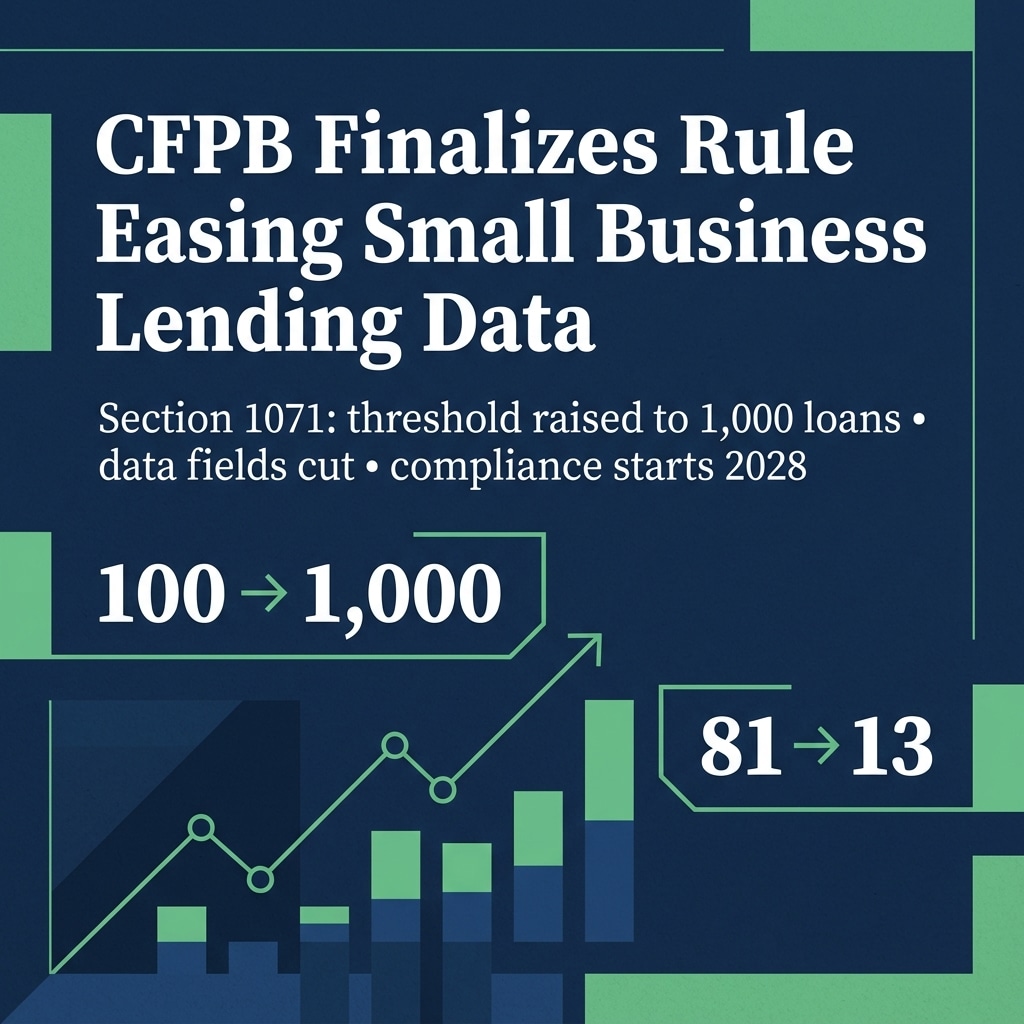
The Consumer Financial Protection Bureau (CFPB) on May 1, 2026, finalized a dramatically scaled-back version of its small business lending data collection rule, known as Section 1071. The revised rule, published in the Federal Register, becomes effective June 30, 2026, with a compliance date of January 1, 2028.
The changes are sweeping. The origination threshold for covered lenders jumped from 100 to 1,000 small business loans per year over two consecutive years. That single change shrinks the number of affected financial institutions from roughly 2,500 to about 280, according to Banking Dive. Small banks and credit unions that originate fewer than 1,000 loans are essentially exempt.
The required data fields were cut from 81 to 13, dropping back to the statutory minimum Congress originally set in the Dodd-Frank Act. Gone are requirements to collect borrower demographic information such as race, ethnicity, and LGBTQ+ status. Loan pricing and denial reasons are also no longer required.
The definition of a “small business” was also tightened. It now covers businesses with gross annual revenue of $1 million or less, down from the $5 million threshold in the 2023 version. Merchant cash advances, agricultural lending, and loans of $1,000 or less are excluded from coverage. Farm Credit System lenders are fully exempt.
For small business owners, the practical effect is straightforward. If you apply for a loan from a large lender that meets the 1,000-origination threshold, you may be asked a handful of questions about your business starting in 2028. You have the right to decline answering demographic questions. The first reporting deadline for lenders is June 1, 2029.
Acting CFPB Director Russell Vought estimated the narrowed rule would save $166 million annually in compliance costs, according to American Banker. The American Bankers Association praised the rule for addressing “significant legal and operational concerns.”
Not everyone is satisfied. Some industry groups argued the 1,000-loan threshold is too high and could limit useful lending data. Civil rights organizations have raised concerns that the scaled-back rule will hamper fair lending enforcement and obscure patterns of discrimination in small business credit.
The CFPB has framed this as a “start small, expand carefully” approach, describing Section 1071 as a multi-decade project. Lenders should expect the scope to widen over time. Multiple lawsuits challenging the original 2023 rule remain pending, and the narrower version could itself face legal challenges from groups that favored broader data collection.
