

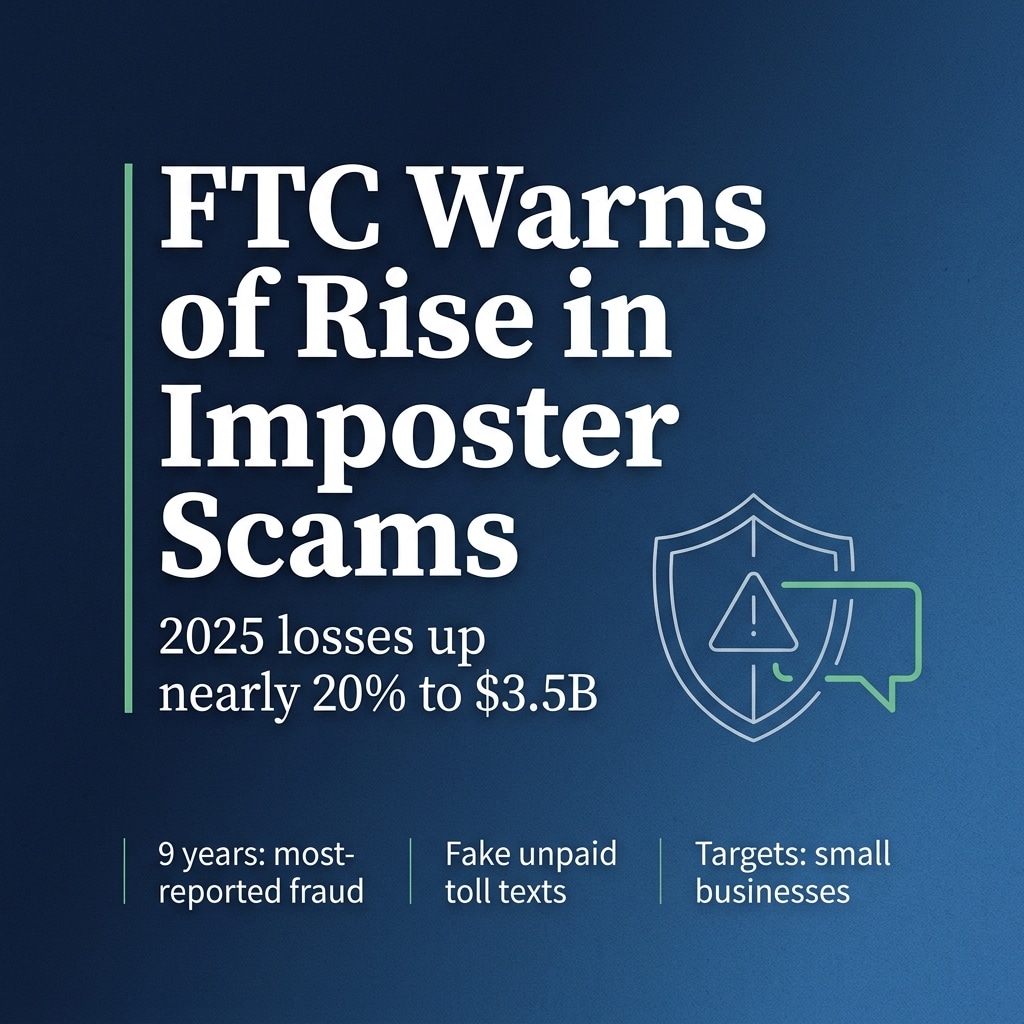
The Federal Trade Commission issued a consumer alert on May 7, 2026, warning that imposter scams have now been the most-reported type of fraud for nine straight years. In 2025, consumers filed more than 1 million reports about these scams and lost a combined $3.5 billion, a nearly 20% increase from the year before.
A major driver of the surge was fake text messages about unpaid tolls. Reports of government imposter scams jumped 40%, fueled partly by bogus messages that spoof real toll collection programs like EZ-Pass, SunPass, and FasTrak. The texts threaten late fees or suspension of your vehicle registration unless you pay immediately.
The broader fraud picture is just as alarming. An FTC official told a congressional committee in March that consumers sent the agency 3 million total fraud reports in 2025, with $15.9 billion in overall losses, up from $12 billion in 2024.
For small business owners, these numbers matter. Scammers routinely impersonate government agencies, suppliers, banks, and even company executives to trick employees into wiring money or handing over sensitive data. A single successful impersonation attempt can mean thousands of dollars gone and customer information compromised.
The FTC recommends a few straightforward steps. If your business gets an unexpected call, text, or email demanding payment or personal information, do not use the contact details provided in that message. Instead, look up the organization’s phone number or website independently. No legitimate government agency will pressure you to pay immediately by wire transfer, gift card, or cryptocurrency.
Business owners should also consider training employees on how to spot these scams. Simple verification procedures, like requiring a second approval for any wire transfer or unusual payment request, can stop many of these attacks. If you or an employee encounter what looks like a scam, report it at ReportFraud.ftc.gov.
As AI tools make fake messages, calls, and even video more convincing, the FTC expects these scams to keep evolving. The agency plans to continue publishing data updates and enforcement actions through 2026, so staying informed is as important as ever.
