
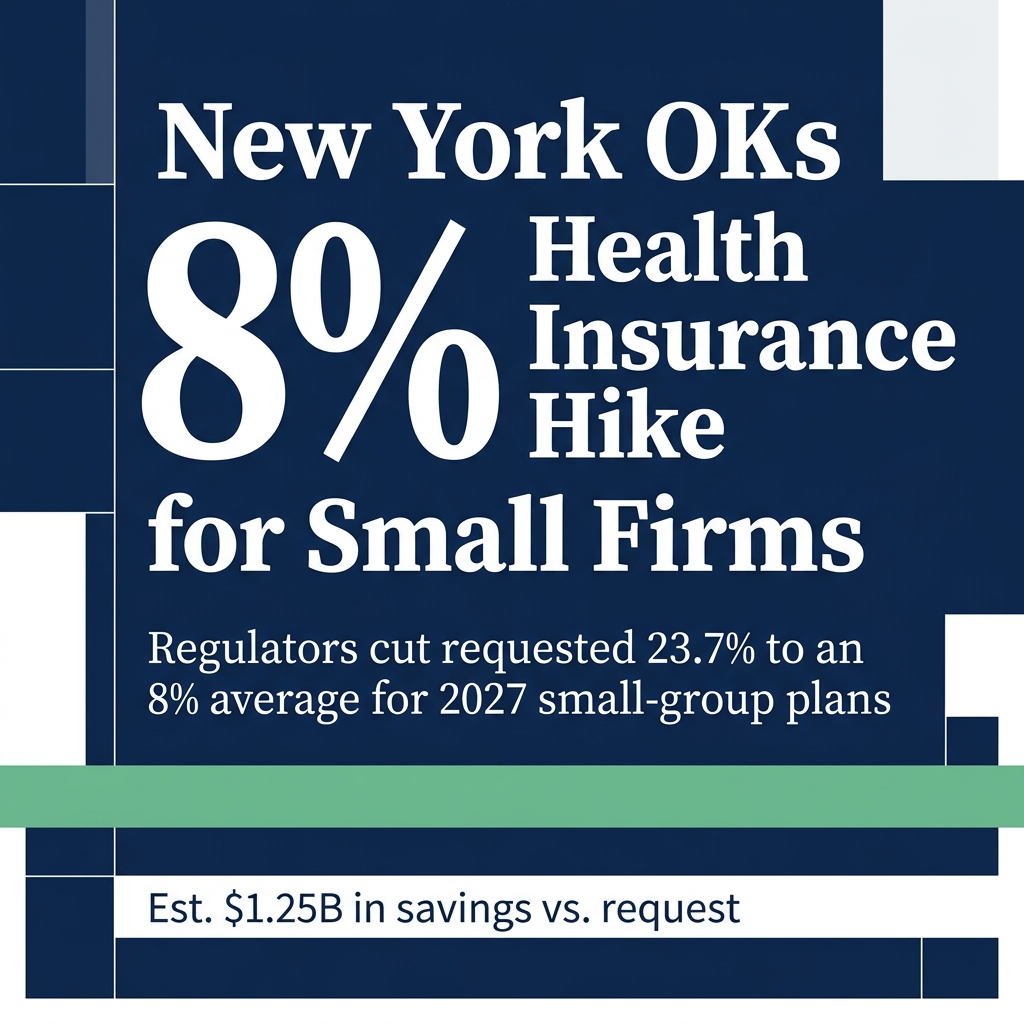
New York insurers asked for an average 23.7% premium hike on small-group health plans for 2027. State regulators handed them 8%.
The Department of Financial Services announced on September 4 that it had slashed the requested small-group increases by roughly two-thirds, producing an estimated $1.25 billion in premium savings for small businesses compared to what carriers originally sought.
That 8% average still stings. For a 10-person company paying $8,000 per employee annually in premiums, an 8% bump adds roughly $6,400 to the yearly bill. And the statewide average masks a wide spread. Some carriers got much more.
Not every plan got the same deal
Approved rate changes vary dramatically by insurer. Anthem HealthChoice was approved for a 14.4% increase, MVP Health Plan for 13.6%, and Excellus for 13.5%. Highmark got a flat 0% increase, and Emblem will actually cut rates by 0.7%. Businesses on the wrong end of that range will feel a significantly larger hit than the headline number suggests.
The small-group market covers employer-based plans for businesses with fewer than 100 workers. More than 630,000 New Yorkers are enrolled across 11 participating insurers.
Insurers push back
The New York State Conference of Blue Cross and Blue Shield Plans called the approved rates “artificially suppressed,” arguing they do not reflect actual costs. Eric Linzer, president of the New York Health Plan Association, said the approved rates “fail to fully account for the major factors driving premiums,” including hospital prices and rising drug costs.
Nationally, the picture is not much rosier. A Peterson-KFF analysis found the median proposed small-group rate increase across all 50 states is 14% for 2027, driven by climbing medical and pharmacy costs.
Small-business owners should not assume the 8% average applies to their specific plan. The practical move now is to pull renewal notices, compare carrier-specific approved rates, and work with a benefits broker to explore alternative insurers or plan designs before the 2027 plan year begins. Employers with January 1 renewal dates will see the new rates first.
Whether DFS can keep trimming requests this aggressively without carriers eventually pulling out of the market is the longer-term question hanging over the next open enrollment cycle.
