

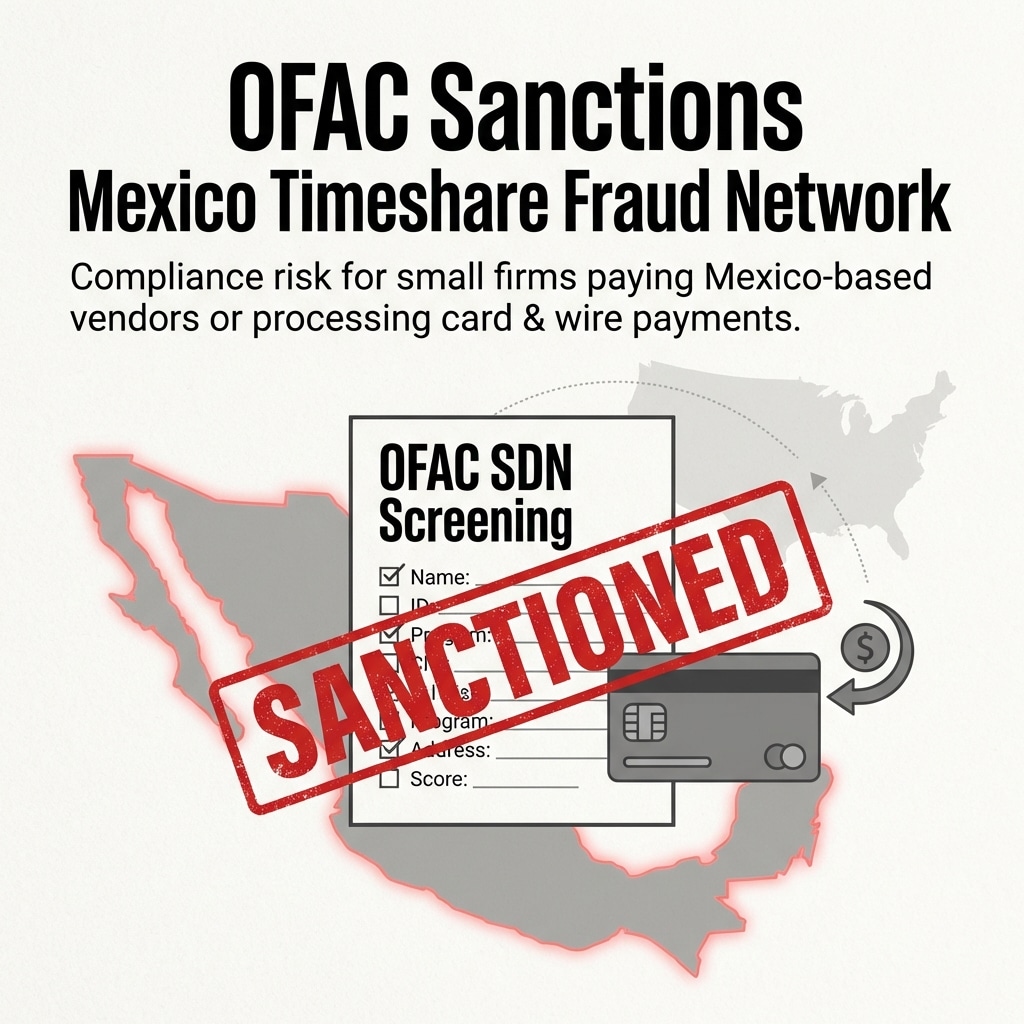
On February 19, 2026, the US Treasury Department’s Office of Foreign Assets Control, or OFAC, sanctioned a Mexico based network tied to an alleged timeshare fraud operation, raising immediate compliance risk for small businesses that pay overseas vendors or process card and wire payments.
OFAC said the designations cover individuals and companies linked to the Cartel de Jalisco Nueva Generación, or CJNG, and a scheme that targeted US citizens through timeshare sales and follow on scams.
Under US sanctions rules, US persons generally must not do business with sanctioned parties, and any property or interests in property that come under US control may need to be blocked, meaning frozen and reported, even if the contact was accidental.
Treasury described the operation as using legitimate looking resort and real estate fronts, then moving into overcharges, resale pitches, and supposed recovery services that demanded more fees, according to the agency’s announcement.
For owners in travel, real estate marketing, call center services, or payment related businesses, the practical issue is that a single vendor, affiliate, or beneficiary on an invoice can trigger bank holds, chargeback problems, or a forced stop to payments while your processor reviews the activity.
What to do this week is straightforward and low cost for most teams, screen Mexico related counterparties, including payees and beneficial owners when you can, against OFAC’s Specially Designated Nationals list, and re check any recurring payments tied to travel promotions, resort bookings, lead gen, or refund services.
If you use a payment processor or bank platform, ask what sanctions screening they run automatically and what data they need from you, since missing address or entity details can slow reviews when a name looks similar.
Primary details are in the Treasury release at Treasury’s OFAC announcement, with additional reporting at The Wall Street Journal.
Next, expect banks and processors to update their monitoring rules quickly, so businesses that operate in cross border travel and real estate should watch for new onboarding questions, delayed settlements, or requests to confirm who ultimately receives funds.
