

- Judge whether admiration and mission translate into repeat purchases.
- Estimate what sales volume is required to cover a shop’s real monthly costs.
- Decide if your product line is a business or a subsidized fundraiser.
A group of Latino nonprofits recently opened retail shops inside their own buildings. The idea was simple and smart: sell products made by local entrepreneurs, use the revenue to fund community programs, and give small vendors a real storefront. ABC News covered the initiative, highlighting organizations like Mission Lotería that turned office space into a small store stocked with candles, jewelry, and artisan goods.
The launch photos looked great. Community members showed up. Local press ran the story. Social media lit up with support.
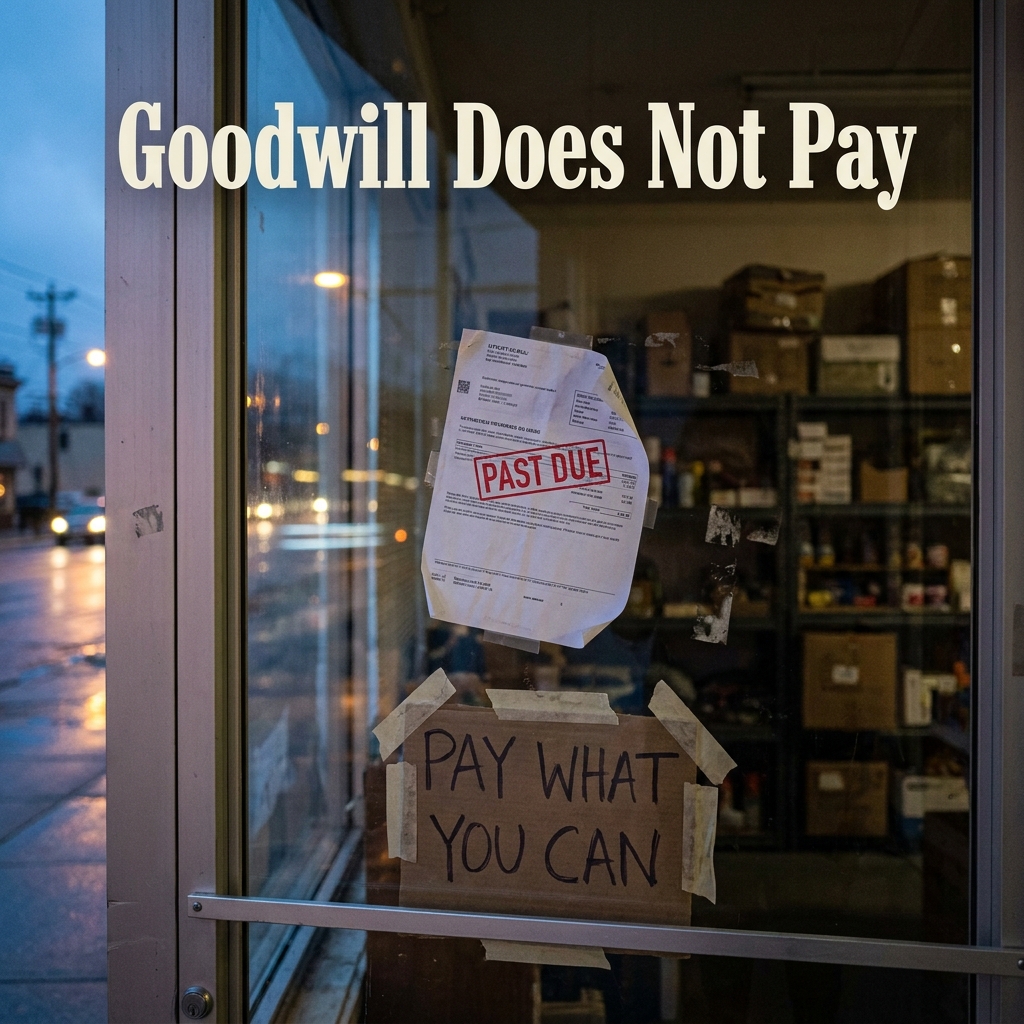
Then the 15th of the month arrived. The register tape didn’t match the applause. Products sat on shelves. Foot traffic thinned out after the opening weekend. And the rent bill looked exactly the same as it would for any other tenant in the building.
That gap between the excitement of opening day and the reality of day 30 is where most mission-driven product lines quietly start to bleed.
Admiration Doesn’t Reorder
There’s a distance between how much people love your brand and how often they actually buy from you. Call it the goodwill gap. It’s the space between someone sharing your Instagram post and someone placing a second order.
Think of it like a restaurant where every guest tells their friends the food is incredible. Five-star reviews everywhere. But on a Tuesday night, the dining room is half empty. The chef is cooking for compliments, not for covers.
This happens to any business that leads with its story. Veteran-owned. Woman-founded. Locally sourced. Organic. The story earns attention. It earns admiration. But admiration alone doesn’t keep the lights on. Even Tiny Grocer in Austin, a business with a loyal following and a clear brand identity, had to make hard real estate decisions based on what the numbers actually said, not what the crowd wanted.
Ask yourself this: does your best customer buy because of your story, or because of your product? If you removed the story entirely, would they still come back?
What the Shelf Actually Costs Each Month
Most founders can tell you their rent. Fewer can tell you the full monthly cost of keeping a product line alive. So let’s sketch it out.
The numbers below, visualized in the following chart, are illustrative. They don’t come from any one company’s books. But they represent realistic ranges for a small mission-driven retail operation selling physical products, whether in a shared storefront or a small leased space.
- Rent or shared-space fee: $800 to $2,500
- Inventory purchases, meaning what you pay to get products on the shelf: $1,500 to $4,000
- Packaging and shipping supplies: $200 to $500
- One part-time staffer or your own hours at $18/hour, 20 hours a week: $1,440
- Payment processing fees (typically 2.5% to 3% of sales): $150 to $400
- Marketing, even just basic social media ads and printed materials: $100 to $500
Now flip the math. If your average product sells for $25 and your cost of goods (what you paid the vendor or manufacturer for it) is $12, your gross margin per unit is $13. To cover a $6,000 monthly nut, you need to sell about 462 units. That’s roughly 15 sales every single day, weekends included.
Can your foot traffic or web orders actually hit that number? Not on your best day. Every day.
Grab your own rent, your own cost of goods, and a real number for your labor. If you can’t reach the break-even line with normal traffic on a slow Wednesday, the product line is being kept alive by something other than sales.
Cheap Prices and Solidarity Shelves
Mission-driven founders often price low on purpose. The thinking goes: our community can’t afford premium prices, so we’ll keep things accessible. It feels generous. But it quietly kills the business that’s supposed to fund the mission.
Consider a shop selling handmade soap at $6 a bar. Cost of goods is $3.50. That leaves $2.50 per bar to cover everything else. Now imagine that same soap priced at $8. The cost doesn’t change. But the margin jumps to $4.50 per bar, nearly double. On 300 units a month, that $2 difference adds $600 in margin. Over a year, it’s $7,200.
Pricing is one leak. The shelf is another.
Mission-driven shops tend to stock products from community vendors or artisans out of solidarity. Someone in the network makes hot sauce. Someone else makes earrings. You want to support them, so you order 50 units and put them on the shelf. Three months later, 35 are still sitting there.
This is emotionally hard. These are people you know. But carrying products that don’t sell ties up cash that could go toward products that do. Consignment, where the vendor owns the product until it sells, is one middle ground worth exploring. It lets you support the maker without absorbing the risk. The same discipline applies whether you run a mission-driven shop or a gift store dealing with products that keep coming back unsold.
Pop-Ups Won’t Pay February Rent
A lot of small product businesses live on spikes. A holiday market brings in $3,000 in a weekend. A press feature drives a wave of online orders. A pop-up event fills the tip jar and clears a shelf. Then January hits, and the shop is quiet for six weeks.
That pattern feels like momentum when you’re in the spike. But it’s a rollercoaster, and every dip threatens the lease. The months between events are where product lines die.
The alternative is building something that brings customers back without a special occasion. A car wash that switched to a membership model solved exactly this problem in a completely different industry. Same idea applies to product businesses. A few tactics that work:
- Refill or replenishment products that customers use up and need to replace, like soap, coffee, candles, or spice blends
- A quarterly subscription box featuring seasonal items from your vendors
- A simple loyalty program, even just a punch card, that rewards a fifth or tenth purchase
- Recurring wholesale accounts with local cafés, offices, or gift shops that reorder monthly
None of these are magic. They all take work to set up and maintain. But they shift revenue from depending on events to depending on habits. Landscaping companies learned the same lesson with recurring maintenance contracts. The industry doesn’t matter. The principle does.
If your business has great months and terrible months, the issue is almost always the ratio of one-time buyers to repeat buyers. That’s true for product lines. It’s true for services too.
A Store or a Fundraiser in Disguise
Picture a founder sitting across from an advisor, looking at three months of sales reports. The advisor asks a simple question: “Is this a store, or is this a fundraiser that looks like a store?”
The founder pauses. “It’s… both?” And the advisor says, “That’s fine. But you’re budgeting it like a store and staffing it like a store. If it’s actually a fundraiser, budget it like one.”
Some product lines are really marketing expenses for a nonprofit or a brand. They build visibility. They tell a story. They create a reason for the press to call. All of that has value. But if the product line loses money every month and only survives because grants or donations cover the gap, it’s not a business. It’s a line item.
If you’d have to explain to a bank why this product line loses money, it’s not a business.
That’s not a reason to shut it down. Grant funding and donor support are real. But be honest about what’s keeping it alive. The danger is treating a subsidized line like a self-sustaining one and making growth plans based on revenue that only exists because someone else is covering the losses. This applies to any founder running a merch line, a side project, or a secondary product they love but that doesn’t cover its own costs.
Five Questions Before You Reorder
- Can you sell enough units at current prices to cover rent and cost of goods without a pop-up, market, or press hit?
- Do you have at least one product that customers reorder without being reminded?
- Can you describe your best customer’s buying frequency in a single sentence?
- If you removed your brand story from the packaging and website, would the product still sell at the same price?
- Could you show your last 90 days of sales to a lender and explain why this line deserves more inventory investment?
If most of those answers are no, you don’t have a product business. You have a cause with a cash register. And the sooner you see it clearly, the sooner you can decide what to do about it.
